The architecture in Sci-Fi Movies inspired me to design a deserted alien landscape.
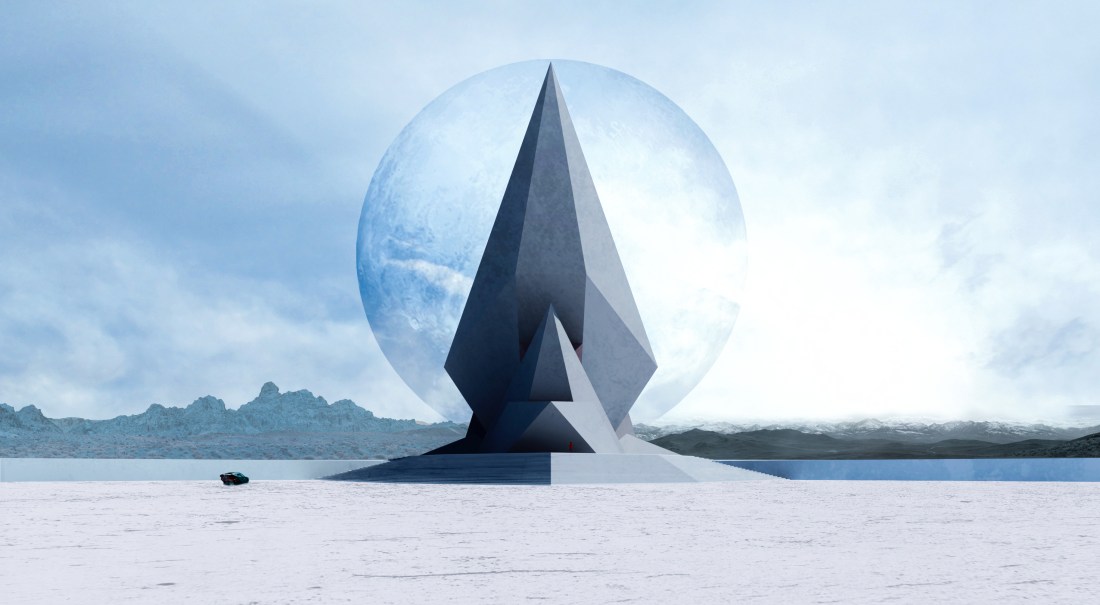
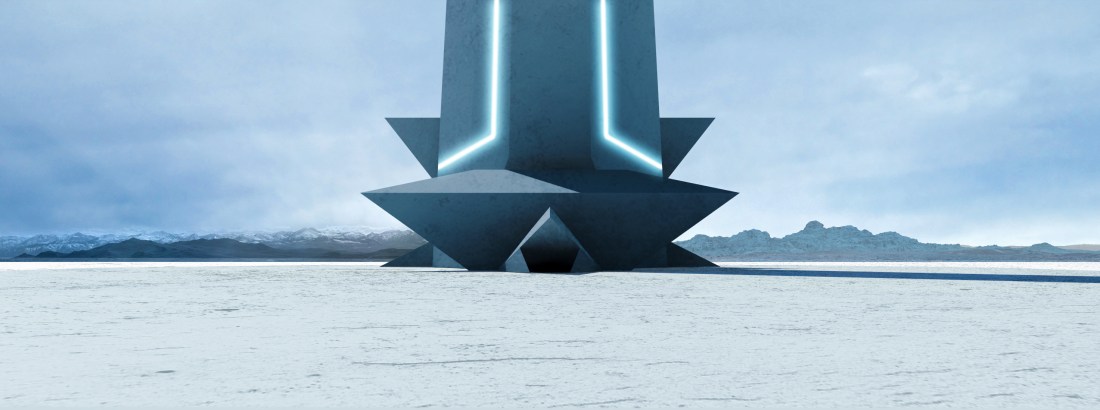

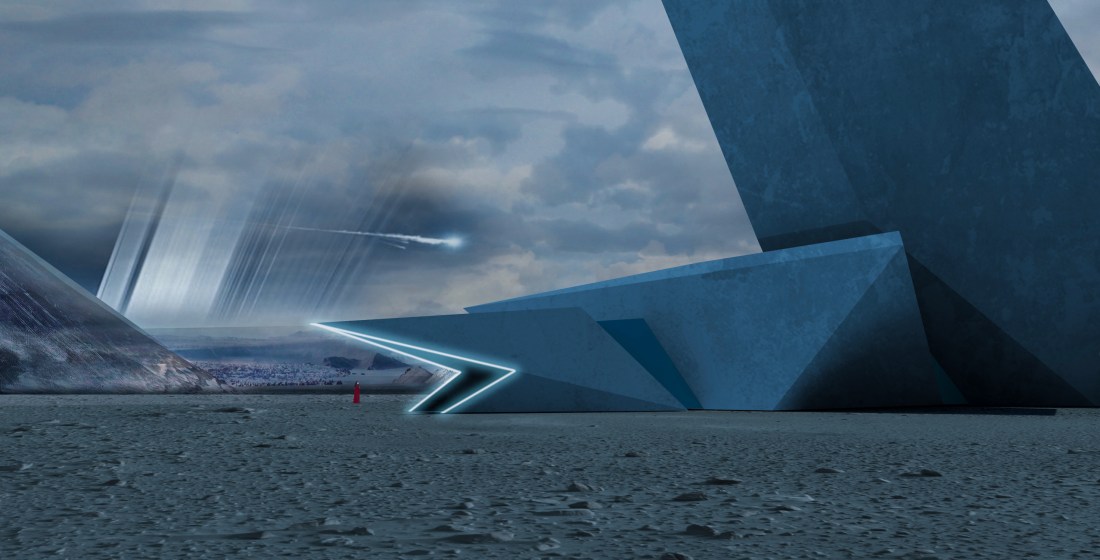


The architecture in Sci-Fi Movies inspired me to design a deserted alien landscape.
This is my graduation project for Station Nijmegen in the Netherlands.
Station Nijmegen has a surface area of circa 2 Hectares and perfectly designed for logistics, rather than the pedestrians. The area had so many little by little design revisions which led to a incoherent public space. Nijmegen is building some new amazing spaces, but the station has somehow been left behind.

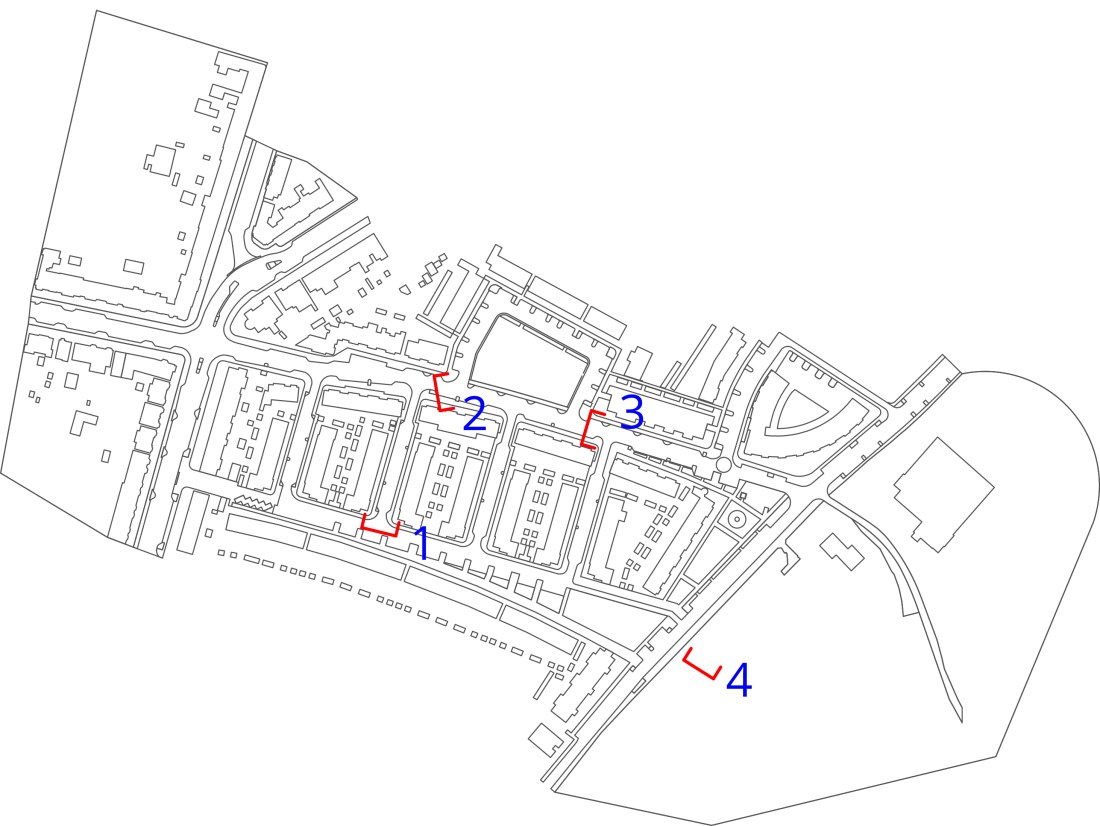
L to R: Three areas, No sight, Barriers, Busroute

L to R: Pedestrian route, Sitting area/city beginning, Different architectual styles, Scale
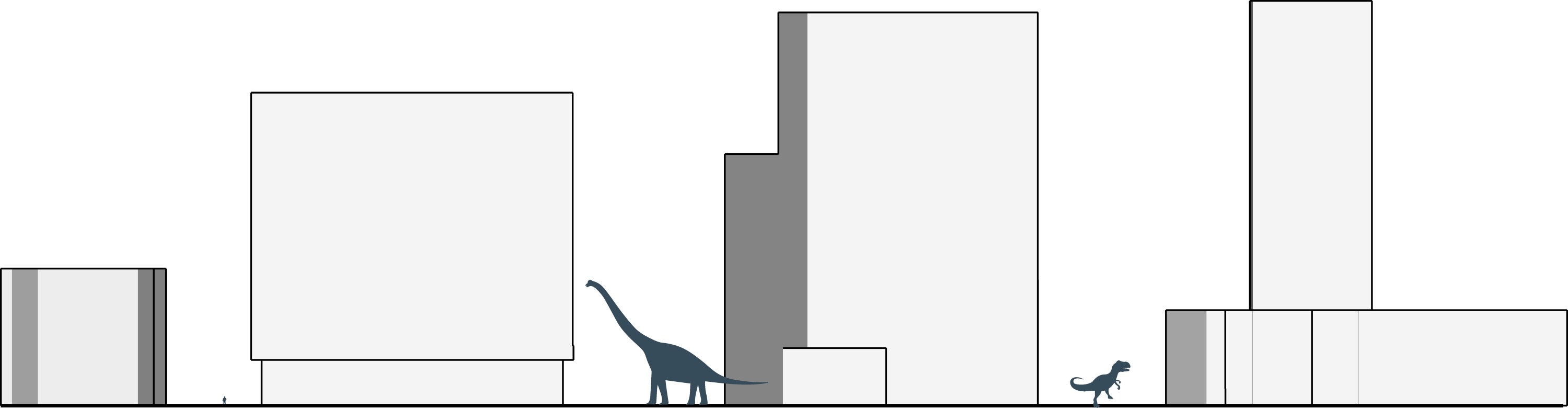
The station is made for dinosaurs, not for humans
The most important aspects I wanted to focus on are making a pedestrianfriendly cityspace, an intuitive wayfinding towards the city, follow trough with one existing architectual style, and bringing back the size of the square to a humane scale. This is brought to life trough a few principles.

Extrapolation of the Italian arches found on the site, which are designed by Sybold van Ravesteyn.

Creating height differences to make smaller spaces

Using the existing architecture to layout a grid, which gives room for arrangement of the square

Simplified layout

Siteplan
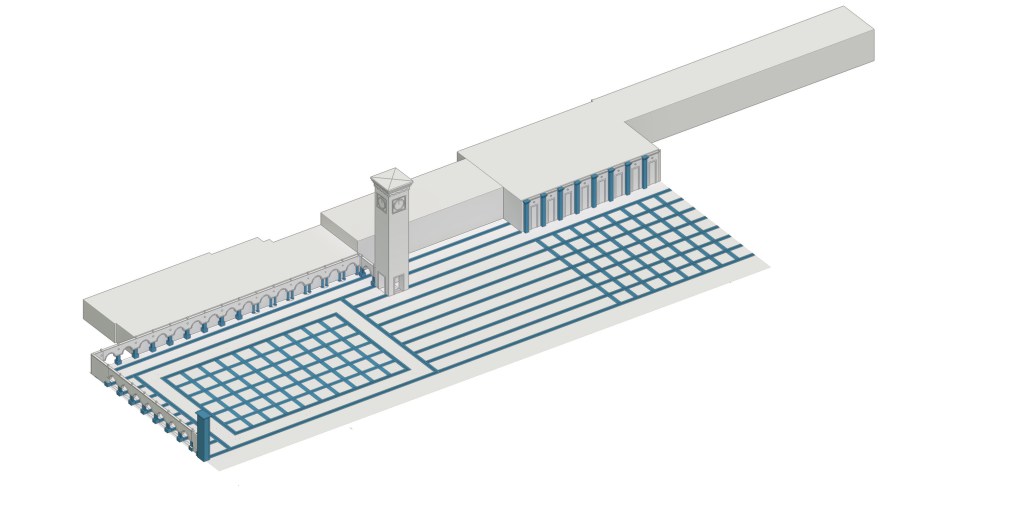
Grid taken from the existing architecture

Relaxing and functional area

Green/shadow and sunny/open areas

Watersystem, everything flows to the Oasis, where is being reused

airconditioning and smelltransfer with the windcatcher principle

New functions, sight, and walkingroute
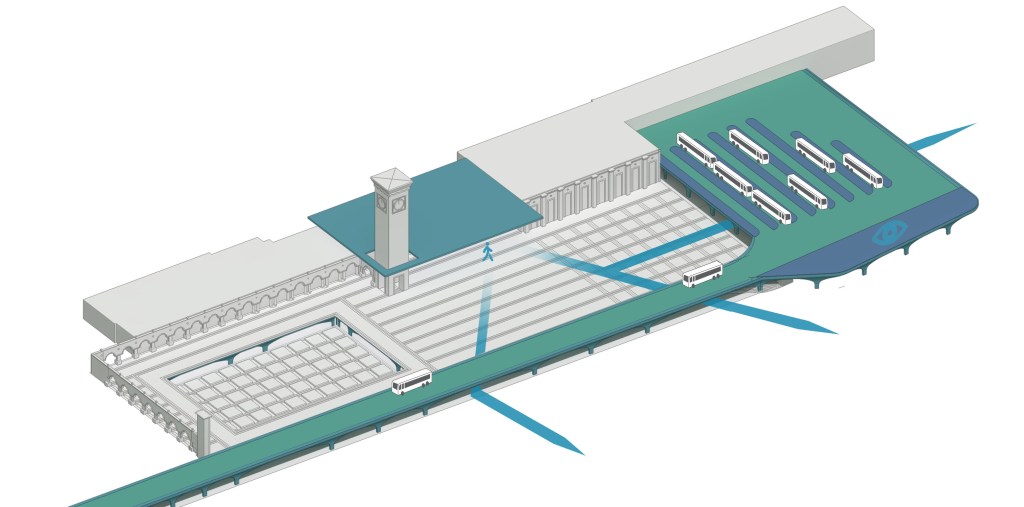
Heightened busstation and route

In the Oasis

Section Oasis
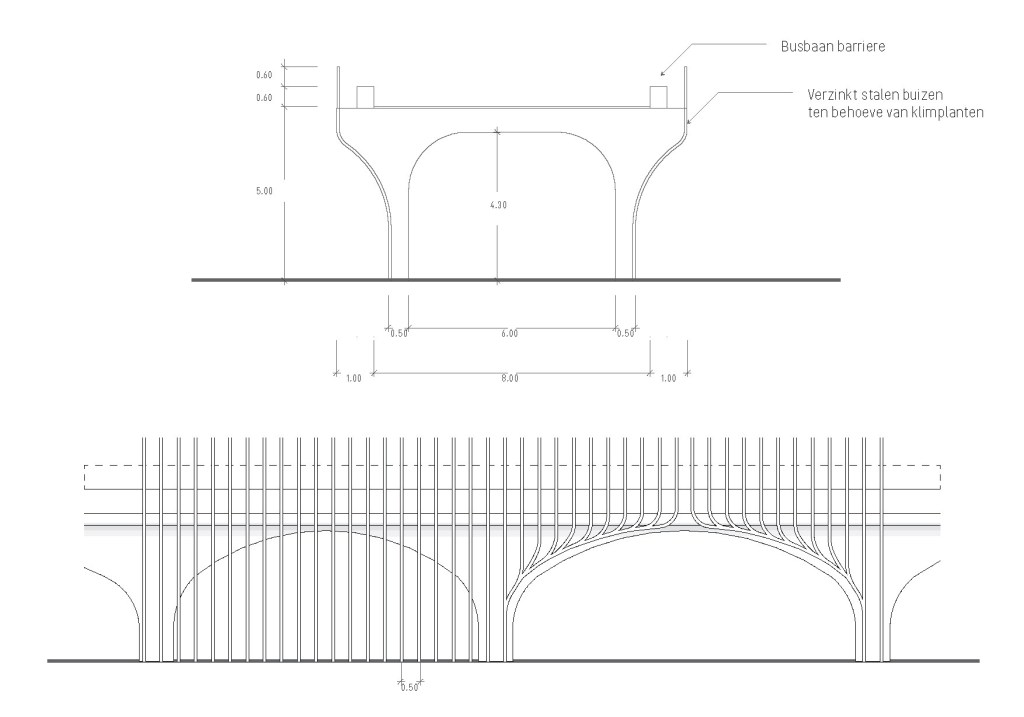
Heightened busroad

Oasis from groundlevel

Section middlesquare

Arrival on the station from the city
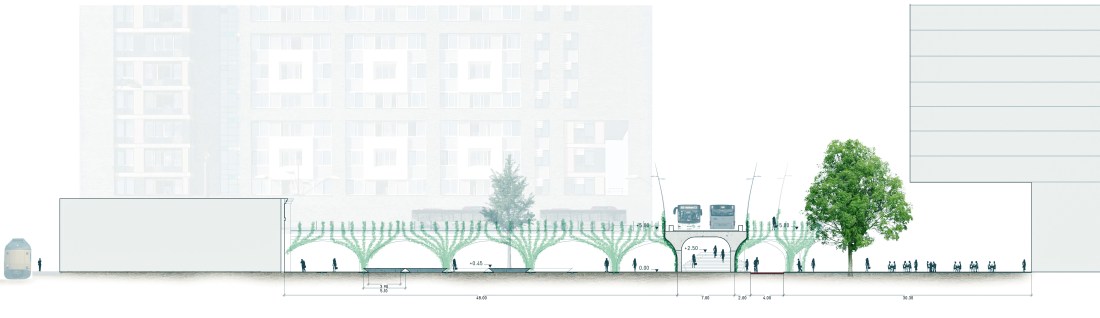
Section functional sunny area
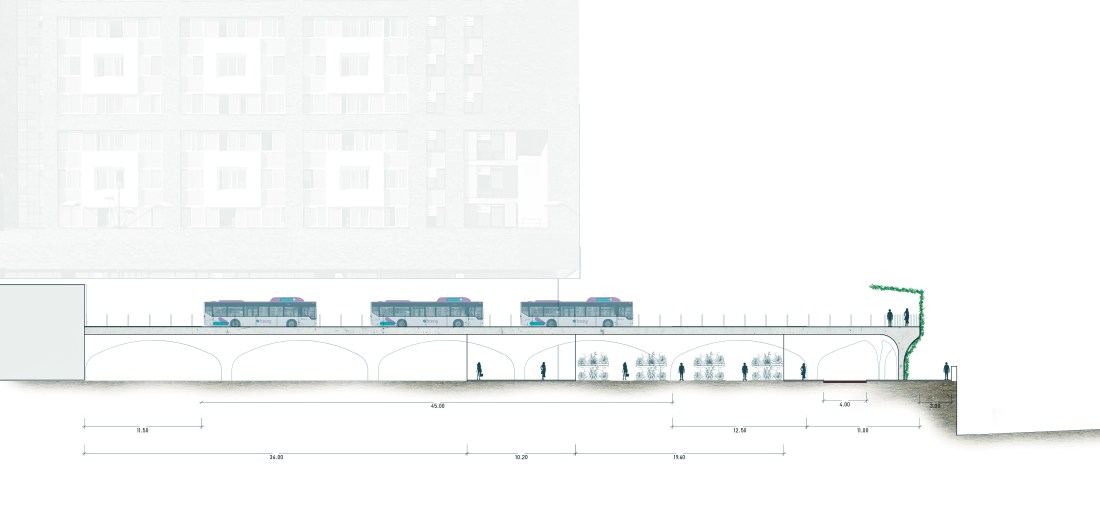
Section busstation

Arrival from trainstation
I started out the day with a design I had in mind for a museum. But after some mishaps with the 3d modeling software, I got inspired to make some monumental structures that are placed in the middle of nowhere. The designs are inspired by the Spomeniks which are placed all throughout former Yugoslavia.
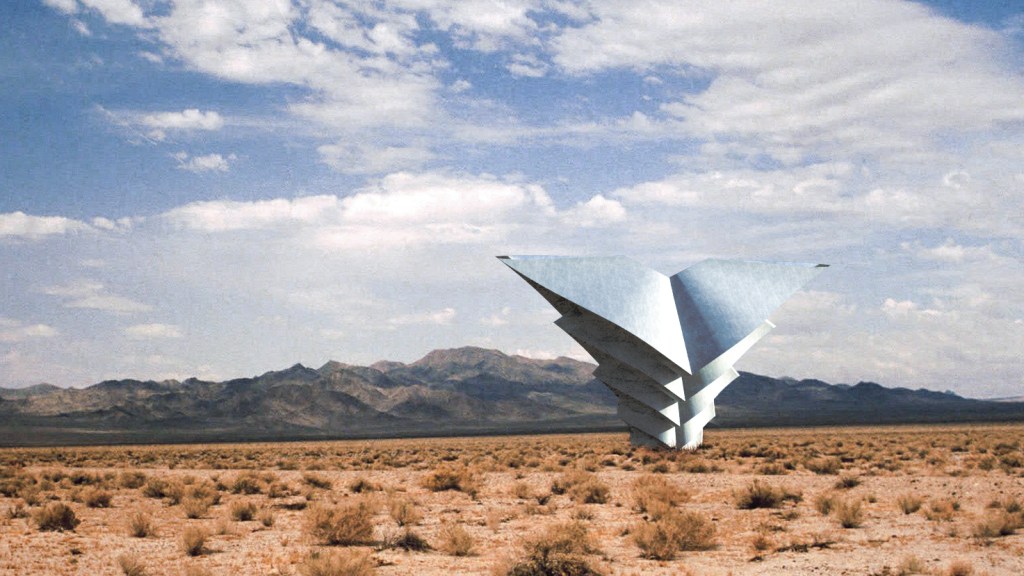
Monument in the desert

Monument in the sea

Monument in wheat field


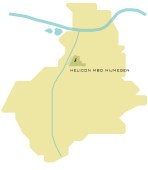
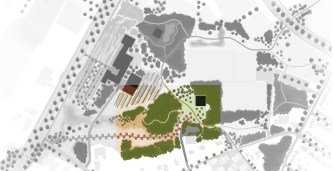
This is the detailed plan for The Green Factory Nijmegen. For this I chose for the area in the South. In the Masterplan this is referred to as The Restaurant. For my design I had something different in mind.


The Identity map and and Industrial map both show that there is a lot of industry on the West-side. This industrial terrain contains; metal companies, garbage disposals, car repair shops. The purple splotch in the North is now a closed coal power plant. On the Uniqueness map you can see that there are a few parks and recreation sites nearby, so that means that the site has to compete with them.
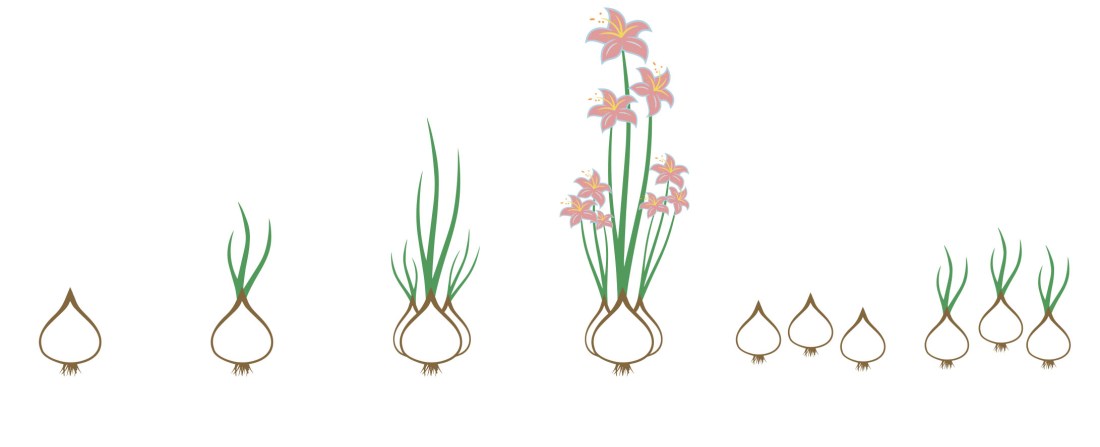
Concept Growth and multiplication
The concept is to spread the idea of sustainable food-production in a social setting. The setting will like in the painting School of Athens. A place where people come and share ideas, but instead of the ideas being metaphysical it will be more like in the Islamic Golden age. In this age the ideas were more specific, like the discovery of the Arabic numerals, Alcohol, Algebra and naming 2/3 of the stars that we see at night.
At the Foodllab people can experiment with different ways of food-production, whereby mechanization and doing more with less is key. When children have a garden look after they score 15 points higher in the subjects math, engineering and science (As explained by Kimbal Musk).
When The Foodlab gets well known, it has the potential to grow further into the city. An important factor is that there will be no export, unless the area around the Foodlab has an abundance of food. The industrial terrain in the East will undergo change in the next 10-15 years. A lot of car repair shops will disappear, since car companies are going to shift their focus to cars without ownership. It will result in less repair shops, quicker repairs (due to smarter design) and less cars. These places that open up will gave space for the Foodlab to expand. When the City eventually becomes self-sustaining it can export their abundance to other cities to even expand even more. This will have to be through the ways of Corporate Social Responsibility.
This design fuses the idea of Jane Jacobs that cities became big because they exported more than they imported, and the idea of A. Naqvi that cities not countries, are the key to tomorrows economies.

Aquaponics examples
Aquaponics is a great way to grow food sustainable, the right one is my own system. The growth is 4 weeks.
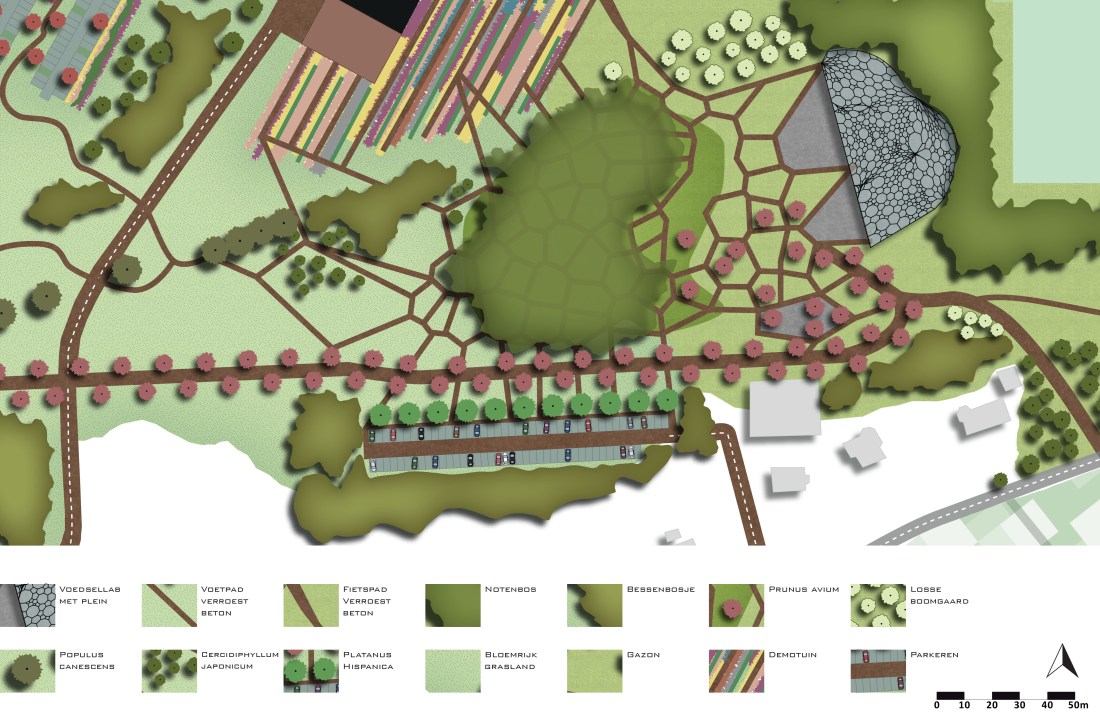
Masterplan 1:1000
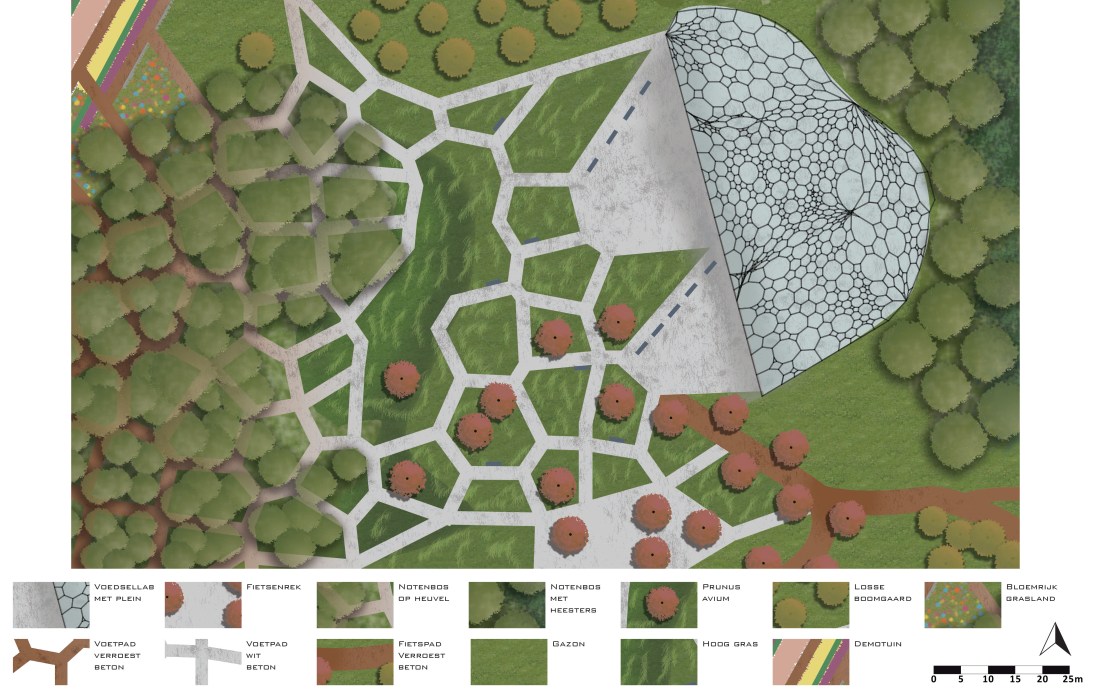
Design 1:500
The Voronoi Diagram is used for this design. I was looking for a way to make the appearance of the Foodlab a surprise. The solution for this is was on the terrain all along. I had a lot of soil left when excavating for the parking-lots and (bicycle-)paths. I placed this in front of the Foodlab to create even more of a surprise. For the building I used the same voronoi diagram with the help of Voronax. It creates the optimal geometry between points trough the same proces as bubbles when they are forming.
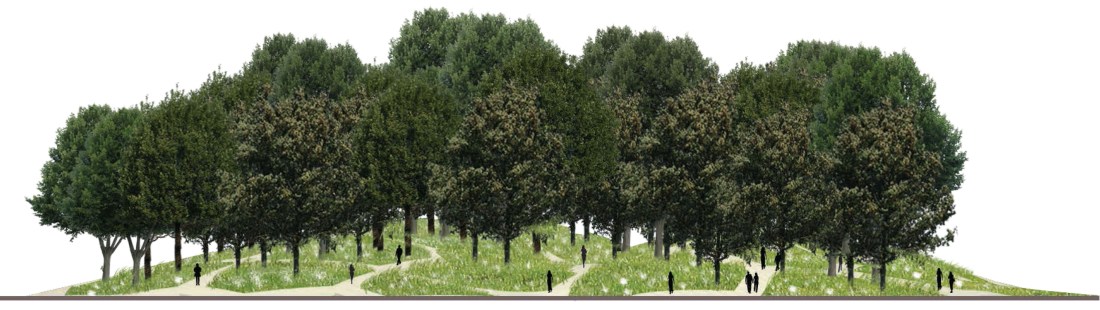
Sideview Voronoi Forest

Cross section Voronoi Forest – Foodlab
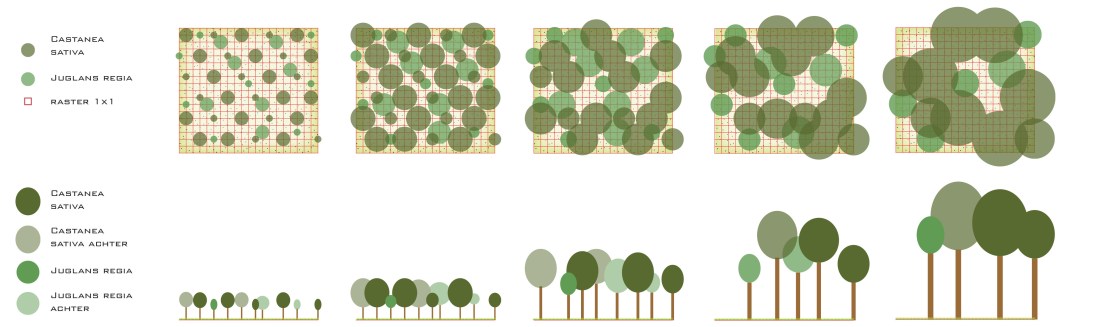
Planting stamp Voronoi (Food-)forest

Visual Foodlab

Visual Voronoi Forest

In the Netherlands we got a full 3 cm of snow this year! That crazy amount of snow was the inspiration for this image. The modeling and rendering is done in Blender. Finding the pictures for the image went rather quickly. The only thing that took a little bit of time was bringing the colors together.
Final Image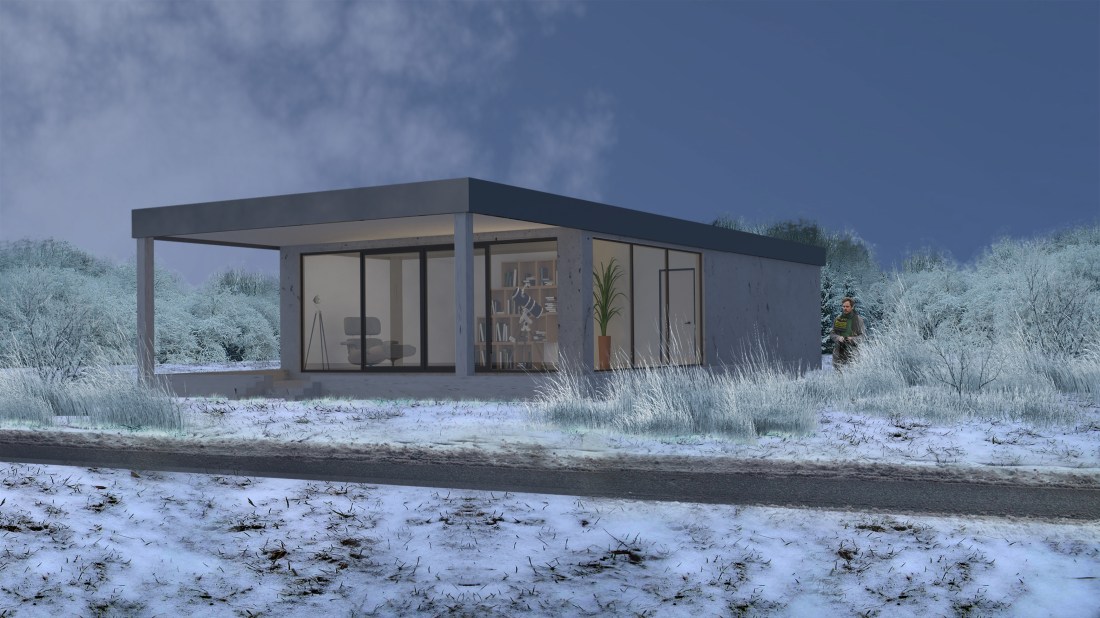
Blender Cycles render
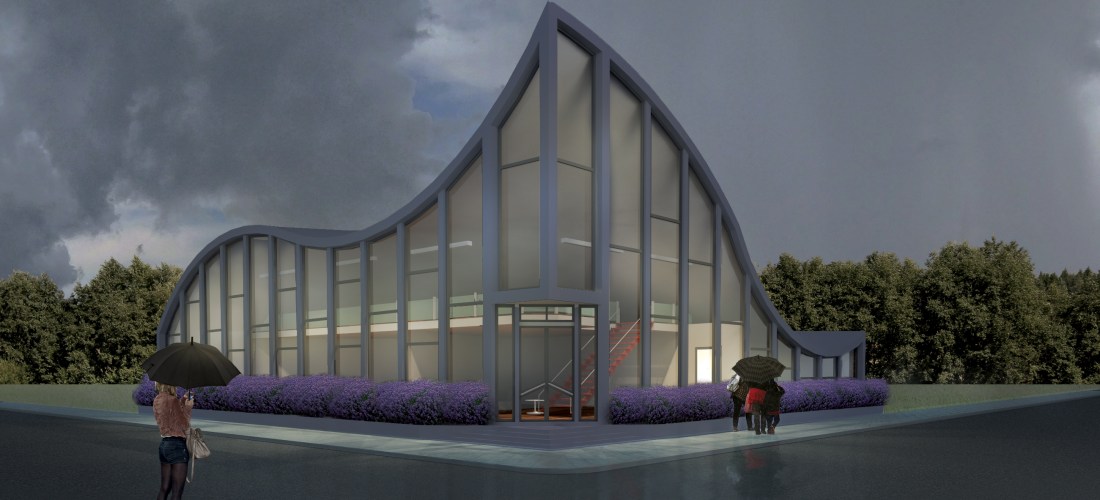
With this image I practiced with simulating a cloudy rainy afternoon. The building is a simple sketchup model which is inspired by the Heydar Aliyev Center by Zaha Hadid. The curved surfaces really got my attention and the next time i will try to only use curved surfaces. After the modeling I rendered the model in Kerkythea and finished it with some post processing.
Final Image
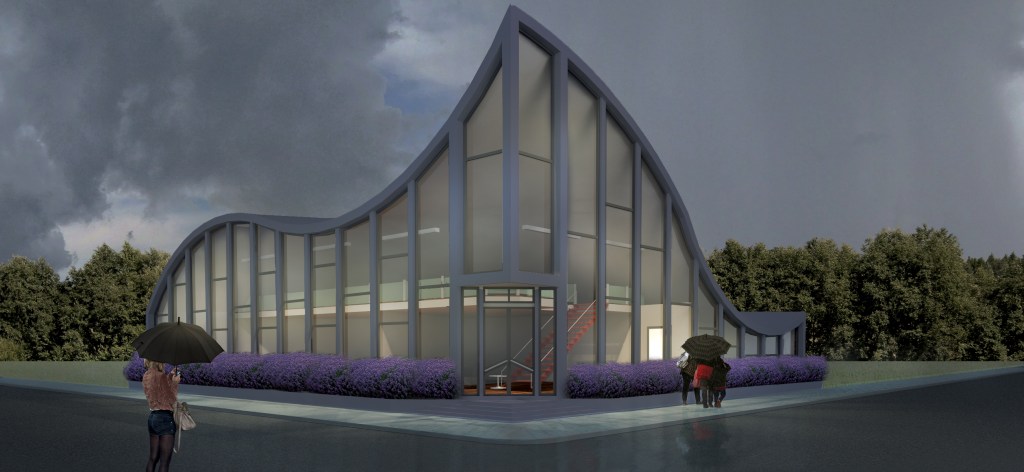
Kerkythea render

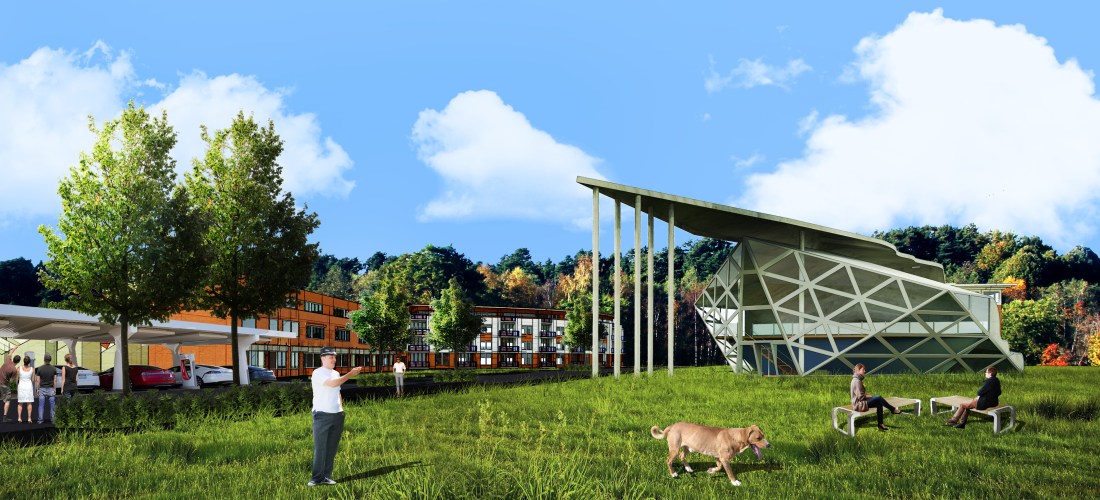
This image-sequence was made for an assignment for school. It is an existing neighborhood in Nijmegen Oost (Netherlands) which i remodeled using Sketchup and rendered with Kerkythea. A part of the assignment was to remove an existing building and replace it with a downloaded model or your own, I chose the latter and it can be seen on image 4. The green (grass, trees etc), solar panels, cars, people and the Tesla superchargerstation were added in photoshop.
1
2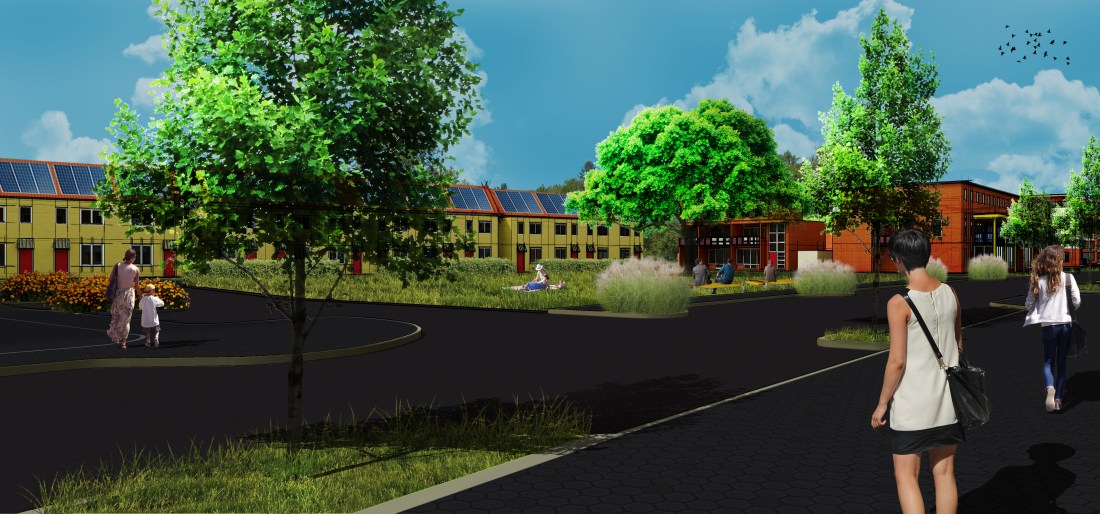
3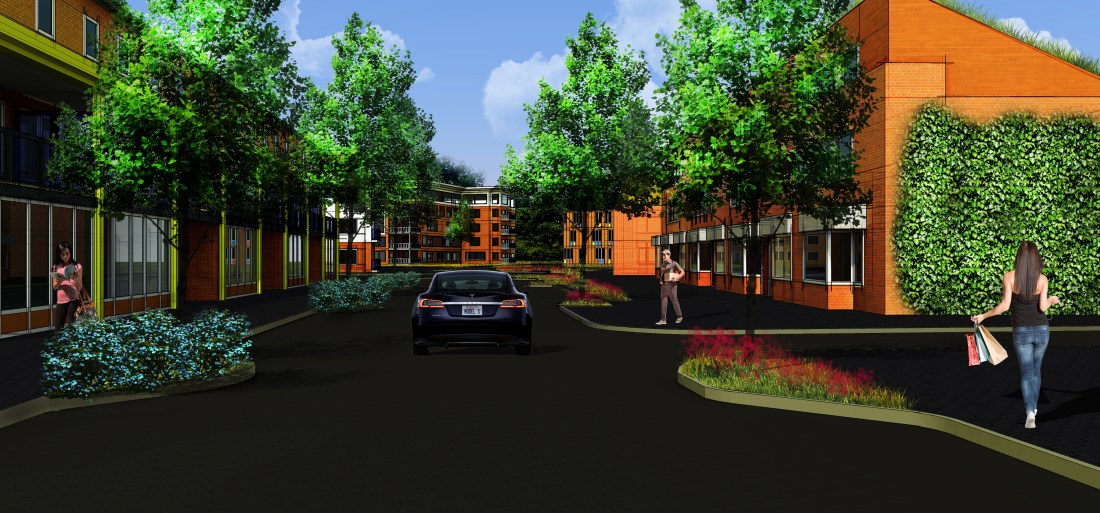
4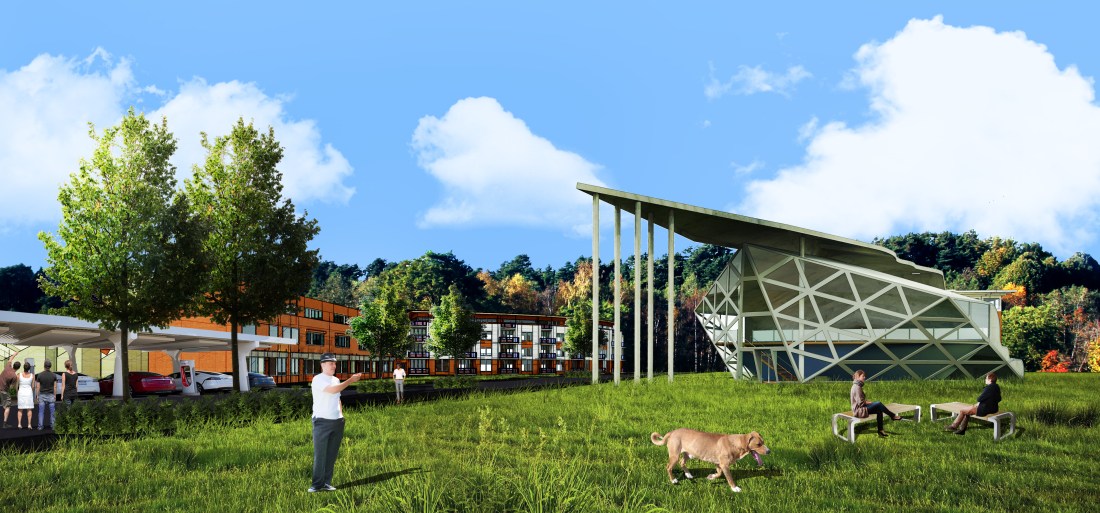
5
 Nauka Design